 Cruise to St Lucia
St Lucia Cruise Port Guide
The St Lucia cruise port greets every ship at Castries, and the port day has one shape whatever your vessel: a terminal, a fifteen-minute walk or a two-minute taxi to the capital, and a west coast of Pitons, volcano and beaches that takes planning to reach. This guide covers the two piers, what is genuinely walkable, the taxi and water-taxi rules worth knowing, and the nearest beaches - the ground-level decisions every shore excursion list starts from. Every stop named here is priced in the St Lucia shore excursions compared on this site.
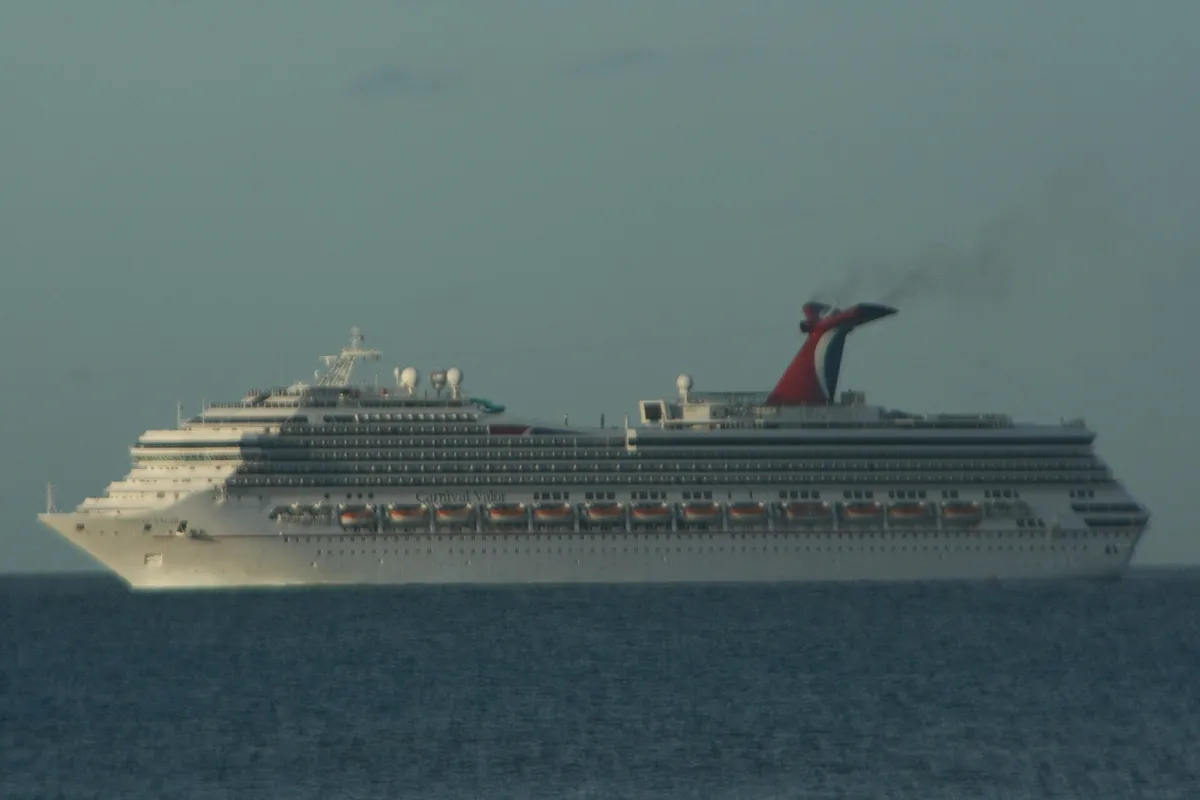
Pointe Seraphine, the larger of Castries' two cruise piers, with the harbour's hills behind. Photo: Ian Gratton, Wikimedia Commons, CC BY 2.0.
Quick answer Two terminals, one walkable capital, a half-hour walk to the nearest beach - and what fits an eight-hour call
Cruise ships dock at Pointe Seraphine, the larger duty-free terminal on the north side of Castries harbour, or at La Place Carenage (the Queen Elizabeth II Wharf) in the town centre itself. Downtown Castries - market, cathedral, squares - is a flat 15-minute walk from Pointe Seraphine and steps from La Place Carenage, and Vigie Beach, the nearest sand, sits under half an hour on foot from the pier behind the George F. L. Charles airport. Everything else that makes Saint Lucia famous - the Pitons, Sulphur Springs, Sugar Beach - sits on the far side of a 1.5-hour winding road, which is why boat and speedboat excursions dominate the bookable lists. Government taxis carry light blue plates marked TX at fixed fares; water taxis reach Marigot Bay and Rodney Bay beaches faster than any road.
Key takeaways
- Deciding between booked tours? The St Lucia shore excursions compared on the homepage state each duration, pickup and cancellation term against a real port day
- A beach-only day needs no tour: the walk to Vigie Beach beats a taxi queue, and the options past it run from quiet La Toc to calm Reduit
- Soufriere in one day is a road-or-sail decision - the port radius chart shows how much of an eight-hour call the drive actually eats
The Two Terminals: Pointe Seraphine and La Place Carenage
Castries has two cruise piers on opposite sides of its harbour, and your day starts differently depending on which one your ship takes. Pointe Seraphine, on the north side, is the larger and newer of the two: a Spanish-styled shopping and departure complex with duty-free halls, a cafe row, currency exchange, a taxi rank, a first-aid centre and a guest information desk, run by Saint Lucia Cruise Port. La Place Carenage - also called the Queen Elizabeth II Wharf - is the older, smaller terminal sitting in the town centre itself, steps from the Castries Market and the Vendor's Arcade.
Both terminals are flat and step-free, with ramps and level walkways, and both put you within walking distance of the capital. The practical difference is small but real: from La Place Carenage you are already downtown, while Pointe Seraphine adds a pleasant 15-minute harbour-side walk - or a two-minute taxi - to reach the same streets. Ships tie up at whichever berth SLASPA, the ports authority, assigns on the day; large ships typically favour Pointe Seraphine's longer berths.
What Is Walkable: Downtown Castries on Foot
Downtown Castries is compact enough to see in ninety unhurried minutes, and it is the free half-day most port guides undersell. From either terminal, the walk funnels toward Derek Walcott Square, the palm-shaded plaza named for the island's Nobel laureate, ringed by the Cathedral of the Minor Basilica of the Immaculate Conception - one of the largest churches in the Caribbean, its interior entirely sheathed in painted murals - and the colonial-era Castries library. The Castries Market sits under five minutes' walk from the square: a covered hall of produce, spices and craft stalls that has been the city's trading heart for generations, loudest on Saturdays.
The Vendor's Arcade and the craft market stalls along the waterfront round out the shopping grid, all within a few blocks. Upper town adds the Morne Fortune viewpoint, a taxi ride rather than a walk, where the old military barracks look down on the harbour - the View at the Morne craft shop there makes it a worthwhile half-hour. Wear real shoes: pavements are uneven, the midday sun is serious, and there is little shade away from the squares.
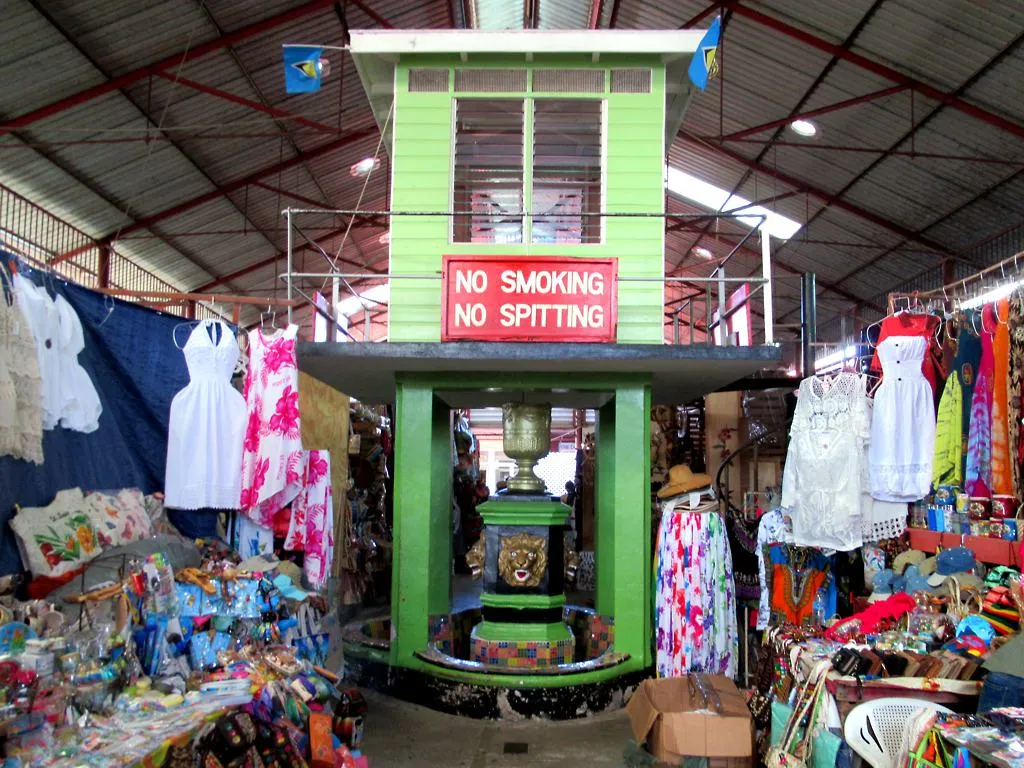
Castries Market, five minutes from Derek Walcott Square - the city's trading heart since the 1890s. Photo: David Stanley, Wikimedia Commons, CC BY 2.0.
The Best Beaches Near the St Lucia Cruise Port
Saint Lucia is not a walk-off-the-ship beach island the way some Caribbean ports are - the famous white-sand bays sit south and north of the capital - but four good options sit within a short move of the pier.
Vigie Beach is the nearest, and the only one within walking distance: under half an hour on foot from Pointe Seraphine, on the peninsula behind the George F. L. Charles airport. It is a long, quiet, gold-sand strand with village atmosphere, palms and calm water on the lee side - planes pass overhead on approach, which most visitors find part of the charm rather than a flaw. There are no big resort facilities; bring what you need and keep an eye on belongings.
La Toc Beach, a 15-minute drive south-west of the port, is the quieter pick: soft sand, palms and a fraction of Vigie's foot traffic, close to the self-named resort. A taxi handles it easily, and the return fare should be agreed before you set off.
Reduit Beach at Rodney Bay, about 20 minutes north by road, is the full-service option: the island's most popular swimming beach, with calm, clear water, beach bars including the well-known Spinnakers, sun loungers for rent and water sports operators lined along the sand. Families with a short port day tend to end up here for good reason.
Pigeon Island, a national landmark at the far north, pairs two small beaches with military ruins and the short climb to Fort Rodney's lookout - reachable by taxi to the gate, or by water taxi from Rodney Bay for about US$15 round trip. And for the postcard shot: Sugar Beach, wedged between the twin Pitons themselves, is the 90-minute drive or the reason the catamaran and speedboat tours sell so well - it is a tour beach, not a do-it-yourself beach, on a port day.
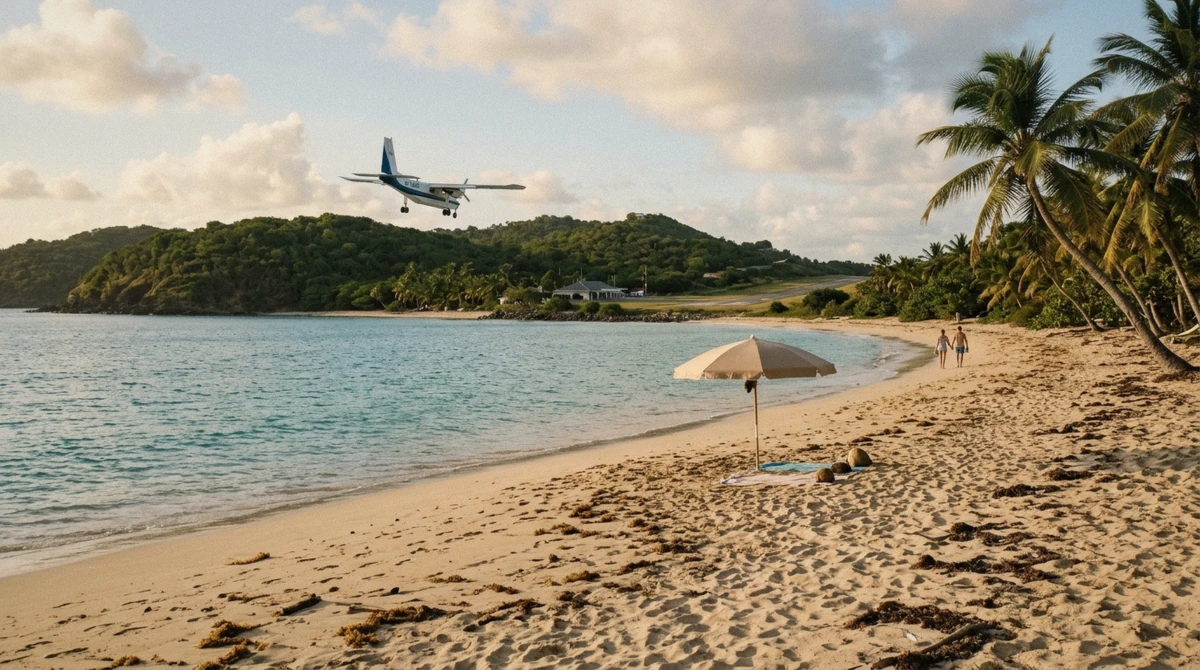
Vigie Beach, the nearest sand to the cruise piers, under half an hour on foot from Pointe Seraphine. Editorial illustration generated for this guide.
Distances That Decide the Day
Every port-day plan is arithmetic against the ship's departure, and the table below is the arithmetic: how far each destination sits from the cruise piers and how it is realistically reached on a day call. Road times assume normal traffic on winding roads - add margin in high season. The 'reached by' column is the honest answer, not the brochure one: several famous spots are tour territory precisely because the road time does not fit a self-planned day.
| Destination | From the port | Time | Reached by |
|---|---|---|---|
| Downtown Castries (market, cathedral, squares) | 0.5-1 km | 15-min walk from Pointe Seraphine; steps from La Place Carenage | On foot |
| Vigie Beach | 2 km | Under 30 min on foot | On foot or short taxi |
| La Toc Beach | 4 km south-west | 15 min | Taxi (fixed fare, agree first) |
| Morne Fortune viewpoint | 3 km up-slope | 10 min | Taxi |
| Rodney Bay and Reduit Beach | 11 km north | About 20 min | Taxi or water taxi |
| Pigeon Island National Landmark | 15 km north | About 30 min by road | Taxi to the gate; US$15 water taxi from Rodney Bay |
| Marigot Bay | 11 km south | About 25 min by road | Taxi or water taxi |
| Rainforest aerial tram (Chassin) | 10 km inland | About 20 min | Tour or pre-booked transfer |
| Soufriere, Sulphur Springs and the Pitons | 35 km south-west | About 1.5 h each way by road | Booked excursion - road tour, catamaran or speedboat |
Taxis, Water Taxis and Getting Around
There is no ride-hailing app worth counting on in Castries, and no cruise passenger should rent a car for a day call - driving runs on the left, the interior roads fold back on themselves, and a wrong turn burns port time no tour would.
Taxis queue at both terminals. The licence plate tells the story: government-authorized cars carry light blue plates marked TX. Fares are fixed by destination rather than metered, which protects the unwary - but confirm the fare and the currency before the door shuts, and confirm it is per car, not per person. A round-trip arrangement with a wait at La Toc or Morne Fortune is normal and worth negotiating upfront.
Water taxis are the island's shortcut and an attraction in themselves: open boats cross the harbour and hop the coast between beaches, Marigot Bay and Rodney Bay, and the run from Rodney Bay out to Pigeon Island costs about US$15 per person round trip. In Soufriere, a water taxi is the standard 10-15 minute hop to Sugar Beach under the Piton. Agree destination, return time and price as with road taxis, and leave the same cushion before all-aboard you would leave for a bus.
One more clock worth setting: Saint Lucia runs on Atlantic Standard Time, UTC-4, all year - but some ships keep their home-port time in port, so set your watch by the time the ship posts on the gangway, not by your phone's local signal.
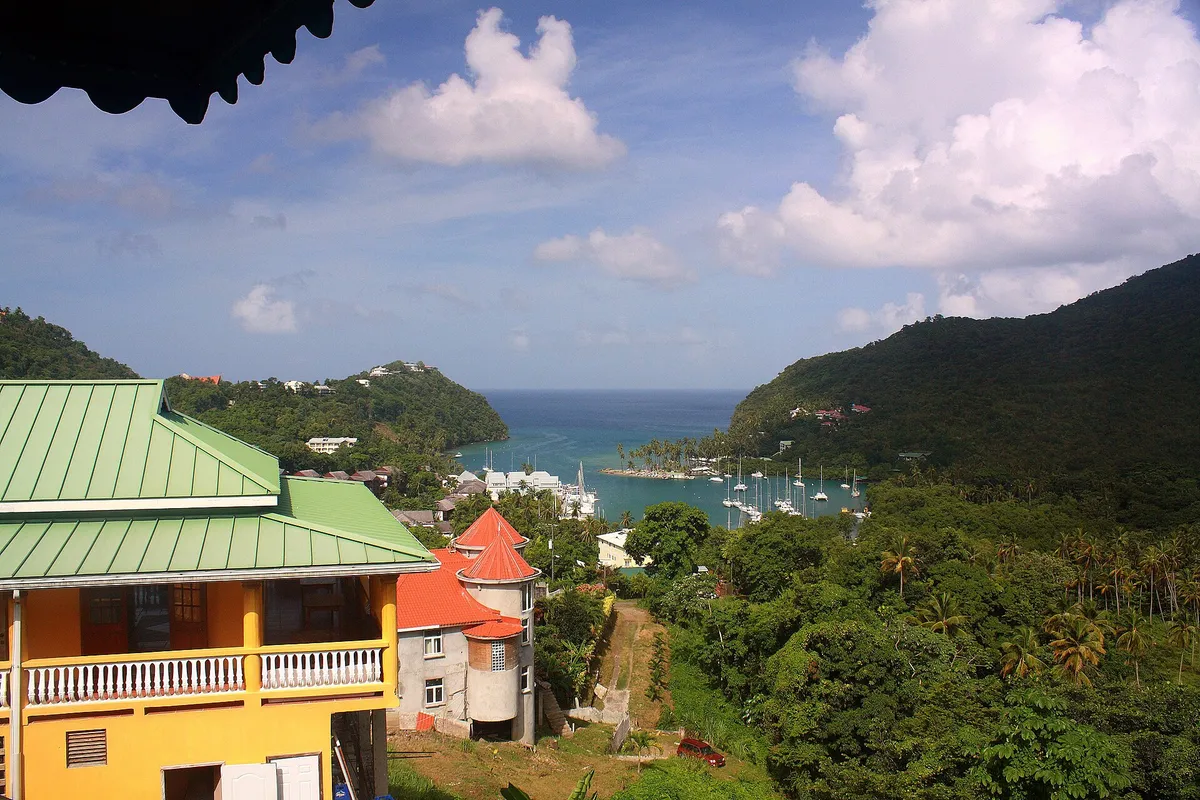
Marigot Bay, 25 minutes south of the port by road and faster by water taxi. Photo: Shawn, Wikimedia Commons, CC BY-SA 2.0.
Free Things to Do Near the Cruise Port
A port day in Saint Lucia does not have to spend like one. The walk from Pointe Seraphine along the harbour into town costs nothing and delivers the capital's three landmarks in a loop: Derek Walcott Square, the mural-filled Basilica of the Immaculate Conception, and the Castries Market, where browsing is free and a bag of cocoa sticks or a bottle of local rum is the cheapest souvenir on the island. The View at the Morne adds a harbour panorama from above - the taxi there and back costs a fraction of any excursion, and the small shop sells directly from Saint Lucian makers.
Vigie Beach, the walkable beach, charges nothing but your sunscreen. On the north side, the waterfront promenade at Rodney Bay Marina is a pleasant free stroll if you are already headed to Reduit. What is never free: Pigeon Island and Sulphur Springs carry entrance fees, the Pitons charge their climbing fee, and every beach with a resort in reach rents loungers - all priced in the excursions table on the homepage for comparison.
Shopping and Food Close to the Piers
Both terminals run duty-free halls - spirits, tobacco, jewellery - and the local-product shopping is better value outside them. The port's own markets list three names: La Place Carenage, the Vendor's Arcade and the Castries Craft Market, between them covering the island's signature takables: locally distilled rum (Chairman's Reserve and Bounty are the shelf names to look for), banana ketchup and other condiments, cocoa sticks for home-made hot chocolate, jars of green seasoning, coconut and spa oils, bamboo and wood craft bags, and handwoven baskets.
For a sit-down lunch on a port day, the choices cluster two ways: the terminal cafes at Pointe Seraphine, which are convenient and priced for it, and short taxi hops to the water - the marina restaurants at Rodney Bay or the beach bars on Reduit, where Spinnakers pours the island's own Piton beer with its feet in the sand. In town, the streets around the market carry small bakeries and creole lunch counters; portions are generous and prices are local. Food safety is no different from any Caribbean port: busy places with a turnover are the right pick.
What to Be Careful Of in Saint Lucia
Saint Lucia welcomes cruise visitors with a functioning, guarded port - both terminals are covered by CCTV and uniformed security, and incidents against passengers in the terminal areas are rare. The sensible precautions are the city ones: keep valuables ship-side or zipped, carry a copy rather than the passport itself, supervise children near the water, and walk with purpose after dark (rarely relevant on a port day).
The port-specific list is shorter and more useful. Taxis first: use the TX-plated cars and agree the fare before moving - unlicensed touts work the pier exits. The sun second: the Caribbean midday burns through cloud, and the most common port-day injury is a day-one sunburn that ruins the cruise. The roads third: left-hand driving on winding hill routes makes the front seat and a motion-sickness tablet the difference for sensitive travellers. The clock last: the port's own FAQ notes Wi-Fi is not reliably available at the terminals, so screenshot your plans before you step off, and sync your watch to the ship's posted port time, which does not always match the island's UTC-4.
Three Port-Day Plans That Fit the Ship
Port calls in Castries run shorter than the Caribbean average - seven to nine hours is typical, not ten - and the honest planning question is which Saint Lucia fits the hours you have.
The 6-hour call belongs to Castries and one beach: the downtown loop, lunch, then the walk to Vigie or a taxi to La Toc. No tour fits six hours with Soufriere in it; the road alone eats four.
The 8-hour call splits two ways. Water people take a booked catamaran day sail or the land-and-sea combination, which move by sea and keep the Pitons, volcano and a swim in range without ever touching the long road. Land people pick one north-side outing - Rodney Bay and Reduit with an afternoon at Pigeon Island, or the rainforest aerial tram inland - and keep downtown for the last hour.
The 10-hour call opens everything, including the full island-drive tours and the Gros Piton hike for the fit and the early-rising. The radius chart below shows why the boat listings dominate: their road time is zero, and the port window is the one resource no excursion can extend.
How Far Each Destination Sits From the Pier
Bars show where a stop's day actually goes, scaled against a typical 8-hour port call: dark segments are road time both ways, light segments are time spent at the place itself. The chart is the argument for sea-based excursions on this island - the west coast's road bill is fixed no matter which van you book.
- Downtown Castries walk 30 min on the road 180 min there Walk both ways plus a real look at the market, square and Basilica
- Vigie Beach 2 km 10 min on the road 240 min there Walk or short taxi; the only beach inside a walk
- Reduit Beach, Rodney Bay 11 km 40 min on the road 300 min there 20 min each way by taxi; calmest swimming near the port
- Marigot Bay 11 km 50 min on the road 240 min there 25 min each way; water taxi shortcuts the road
- Rainforest aerial tram 10 km 40 min on the road 150 min there 20 min each way plus the 2.5 h tour circuit
- Soufriere: volcano, mud bath, Pitons 35 km 180 min on the road 180 min there About 1.5 h each way by road - the bill every land tour pays
- Time on the road, both directions
- Time at the stop
- Full bar = a typical 8-hour port call
Road figures read from the port's own Soufriere itinerary guidance (1.5 hours each way) and standard island taxi estimates; port window varies by ship.
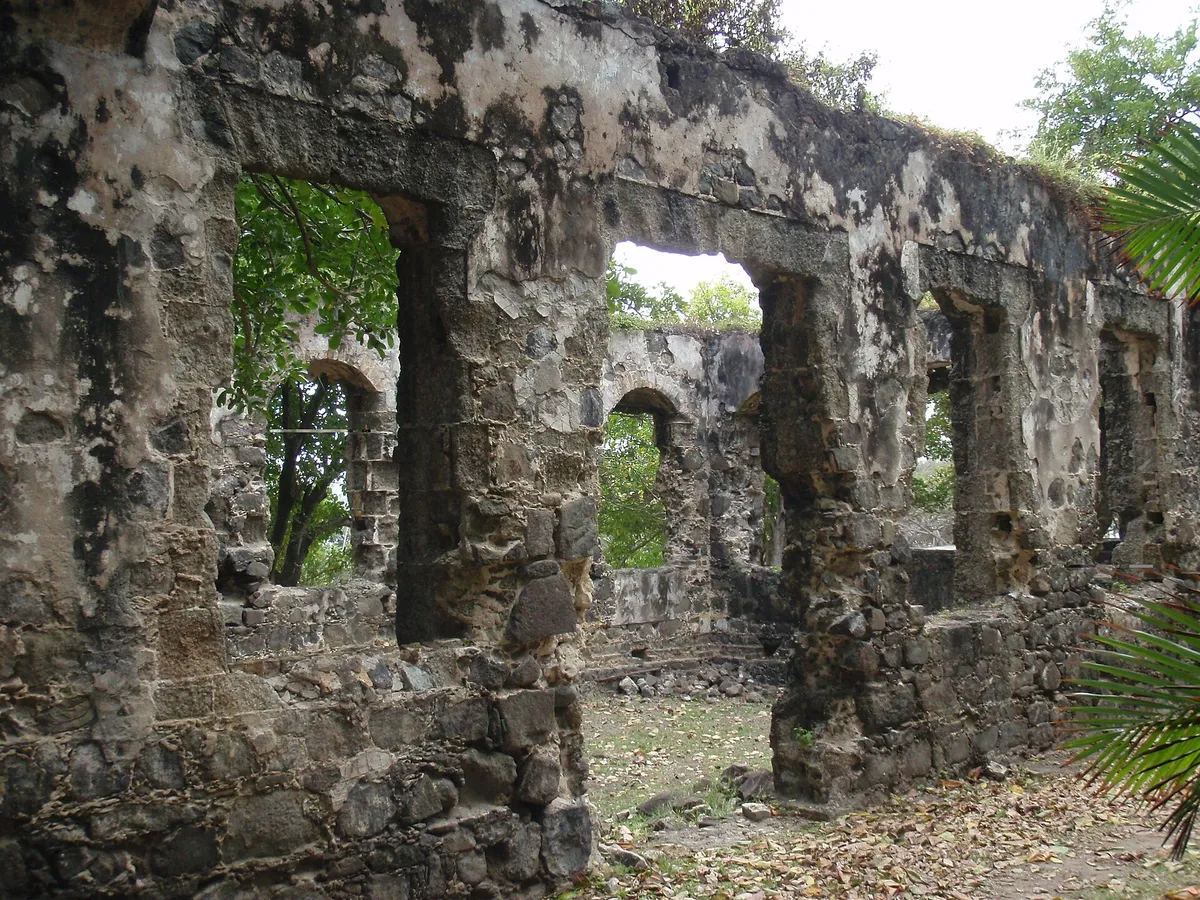
Pigeon Island National Landmark: ruins, two beaches and the Fort Rodney lookout at the island's northern tip. Photo: XeresNelro, Wikimedia Commons, CC BY-SA 4.0.
A Walkable Castries Day, Hour by Hour
The no-tour port day, built for an 8:00-17:00 call and adjustable to anything: it costs taxi fares only, and it ends with the beach most visitors never find.
-
08:00
Off the ship, down the pier
Walk out of the terminal, screenshot your plans (terminal Wi-Fi is not reliable), and set the watch to the ship's posted port time.
-
08:20
The harbour walk into town
Fifteen minutes along the waterfront from Pointe Seraphine brings you to the edge of downtown; La Place Carenage berths step straight into it.
-
08:40
Derek Walcott Square and the Basilica
The palm square first, then the mural-covered Minor Basilica of the Immaculate Conception across the way - cool, quiet and one of the Caribbean's largest churches.
-
09:30
Castries Market and the Vendor's Arcade
Produce and spice hall first, craft stalls after. Cocoa sticks, banana ketchup, green seasoning and small-batch rum make the flat-pack-proof souvenirs.
-
11:00
Taxi to Morne Fortune
Ten minutes up the hill: the old barracks ridge, the harbour laid out below, and the View at the Morne craft shop for locally made work at maker prices.
-
12:00
Creole lunch in town
Back to the streets around the market for a creole plate - stewed chicken, rice and peas, plantain - at local prices before the beach leg.
-
13:00
The walk to Vigie Beach
Either walk it (under half an hour from the pier side) or take the short taxi across the peninsula behind the airport. Palms, calm lee-side water, few facilities - bring what you need.
-
15:30
Slow return and duty-free
Shower off what can be showered, walk back along the harbour, and leave the duty-free rum run for the terminal's air-conditioning.
-
16:30
On board with an hour in hand
Pier-side with the buffer a walk-day makes possible - the margin that booked excursions spend on the west coast's roads.
St Lucia Cruise Port: Questions Before You Step Off
Which terminal will my ship use in Castries?
Ships berth at Pointe Seraphine, the larger duty-free complex on the harbour's north side, or at La Place Carenage (the Queen Elizabeth II Wharf) in the town centre. Large ships typically take Pointe Seraphine; the assignment is made by the ports authority, and your cruise line's port guide will name the pier in the days before the call. The difference on the ground is small - one 15-minute walk.
Can you walk to a beach from the St Lucia cruise port?
Yes - Vigie Beach, the long gold-sand strand behind the George F. L. Charles airport, sits under half an hour's walk from Pointe Seraphine and is the nearest beach to either pier. It is a quiet local beach without resort facilities, so carry water and sunscreen. Every other swimming beach - La Toc, Reduit, Pigeon Island, Sugar Beach - needs a taxi, a water taxi or a tour.
How far is the Pitons from the cruise port?
About 35 km south-west as the road winds: roughly an hour and a half each way from Castries through Marigot Bay and along the coast, which is why every Soufriere excursion is built around boats or a full-day van. On an 8-hour call the road bill leaves about two hours at the volcano-and-Pitons end by land; catamaran and speedboat tours trade the drive for deck time and arrive on the same coast in half the road hours.
Are taxis safe and how do I spot a licensed one?
Licensed taxis carry light blue licence plates marked TX and charge government-fixed fares by destination. Agree the fare, currency and whether the price is per car or per person before you get in, and keep the driver's card if you want a guaranteed return pickup. Unlicensed touts work the pier exits in every Caribbean port - walk past them to the rank.
Is there Wi-Fi at the St Lucia cruise port?
The port's own visitor FAQ currently says Wi-Fi is not available at the terminals, so treat any connection as a bonus: screenshot bookings, maps and your ship's schedule before stepping off, and pick up any needed local cash at the terminal's exchange desk on the way out rather than mid-day.
What is there to do within walking distance of the pier?
Downtown Castries: Derek Walcott Square, the mural-filled Minor Basilica of the Immaculate Conception, the Castries Market and the Vendor's Arcade all sit within about fifteen minutes' walk of Pointe Seraphine and within minutes of La Place Carenage. Add the harbour walk itself and the path out to Vigie Beach and a full no-tour day closes without a single fare.